From disappearing birds to fire brigade sirens, this is how Vivaldi's The Four Seasons sounds 300 years later.
Press release • 21 July 2026
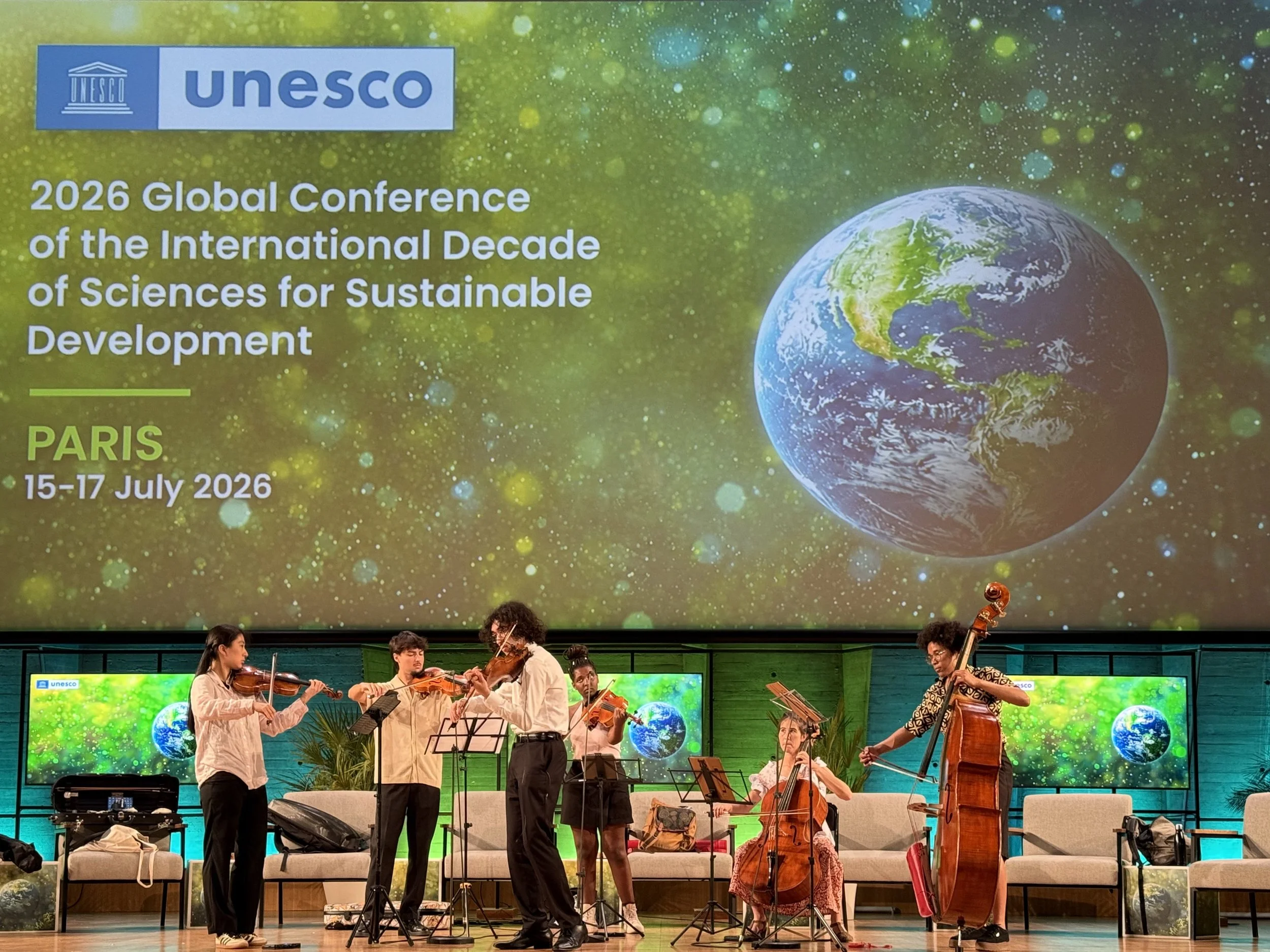
PARIS, 21 July 2026 - Last week, hundreds of scientists, policymakers and sustainability leaders gathered at UNESCO for discussions about climate change and sustainable development. They also heard Vivaldi's The Four Seasons as they had never heard it before: reimagined as a powerful reflection on climate change by 22-year-old violinist, conductor and composer Bartu Elci-Ozsoy, founder and Artistic Director of the SHARE Ensemble.
The performance formed part of a wider initiative by INOMER's SHARE-for-IMPACT exploring a simple but timely question: can music help people engage with science in ways that facts alone cannot? That idea came to life throughout the week at UNESCO Headquarters during the 2026 Global Conference of the International Decade of Sciences for Sustainable Development (IDSSD), where Bartu Elci-Ozsoy and the SHARE Ensemble performed on 15 July, the opening day of the conference, while he returned as soloist for its closing ceremony on 17 July.
The International Decade of Sciences for Sustainable Development (2024–2033), led by UNESCO, aims to strengthen the role of science in achieving the Sustainable Development Goals and addressing global challenges.
Created specifically for the International Decade of Sciences for Sustainable Development, exactly 300 years after Vivaldi completed The Four Seasons, Bartu Elci-Ozsoy’s climate-inspired reinterpretation transforms one of classical music’s best-known works into a reflection on the climate and ecological crisis caused by human activity over the past three centuries.
Bringing together leaders from government, academia, industry, civil society and Indigenous knowledge communities, the conference explored how science can better address today's interconnected global challenges through stronger collaboration and partnerships.
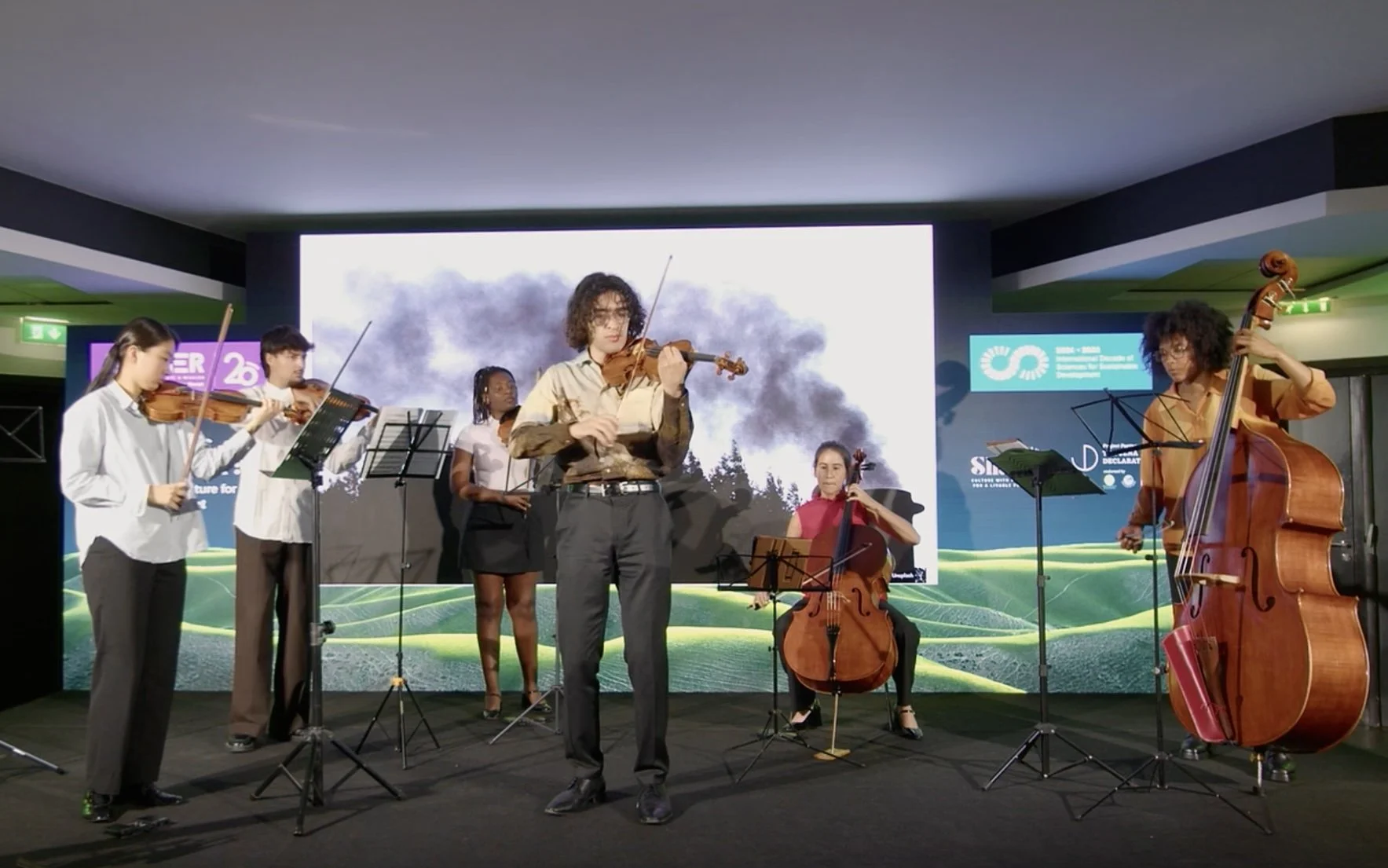
The performances were more than artistic interludes. Bartu Elci-Ozsoy’s original climate-inspired arrangement of The Four Seasons invited participants to experience, rather than merely discuss, the environmental challenges that have unfolded since the work was composed three centuries ago. The familiar sounds of birds gradually fade away, while new sounds, including the distant sirens of fire engines responding to increasingly frequent wildfires, enter the musical landscape. Intensified passages from Summer evoke the growing frequency and severity of the heatwaves now affecting much of Europe.
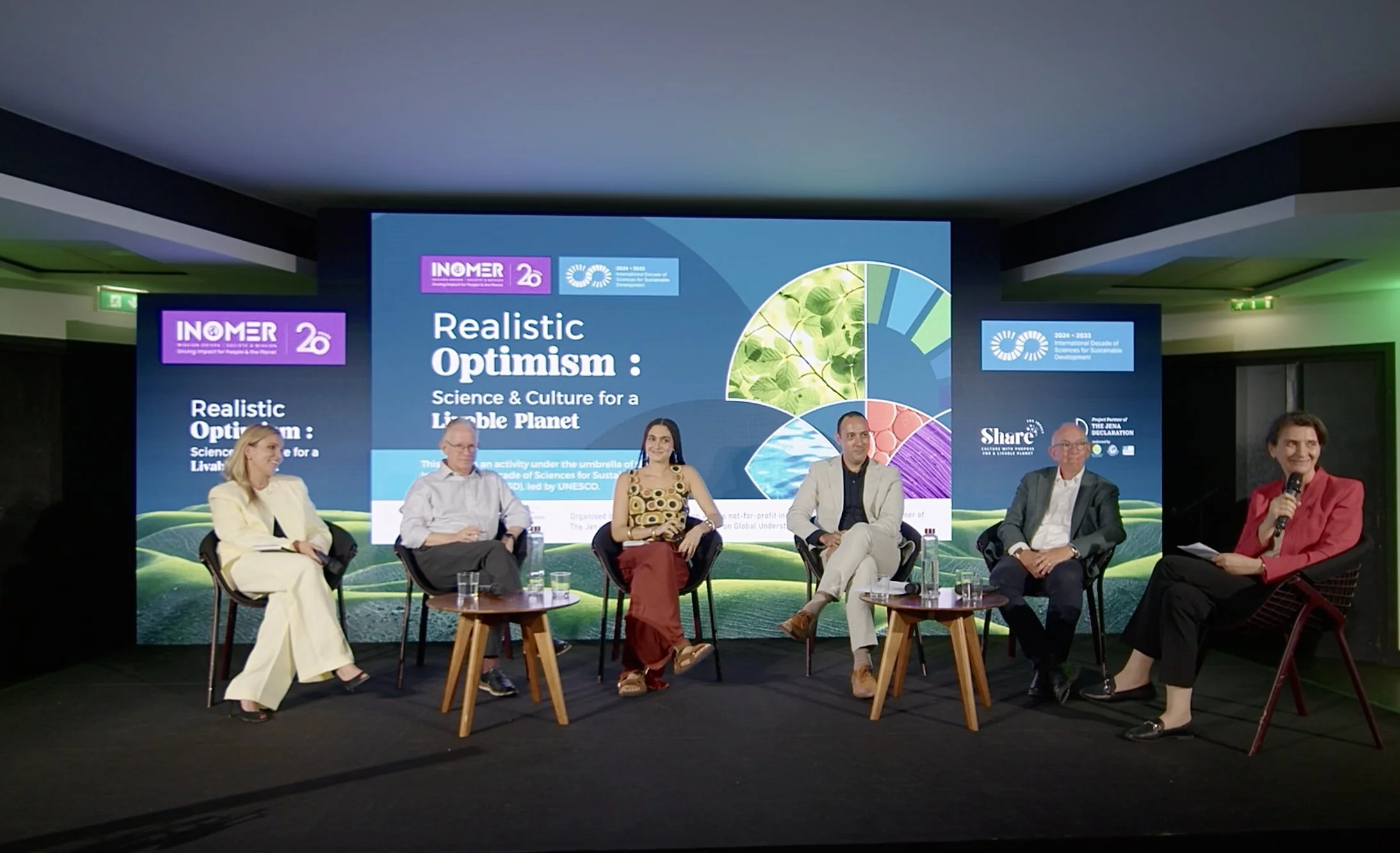
The same idea also shaped Realistic Optimism: Science & Culture for a Liveable Planet, an endorsed activity held on 16 July under the umbrella of UNESCO’s International Decade of Sciences for Sustainable Development and organised by INOMER SAS à Mission.
Music was woven throughout the event itself, which took place at Châteauform’ Les Jardins de Saint-Dominique in Paris. Selected movements from Vivaldi’s The Four Seasons, followed by Bartu Elci-Ozsoy’s climate change-inspired reinterpretation, invited the audience to reflect on environmental change before the programme turned towards hope through new arrangements of Antônio Carlos Jobim’s Waters of March and John Lennon's Imagine, illustrating the evening's journey from realistic assessment to optimism and collective action.
The event brought together internationally recognised leaders from science, sustainability and culture, including Prof. Marcelo Knobel (The World Academy of Sciences), Maja Wegrzynowska (Corelli Global), Prof. Lars Montelius (Lund University), Adam Arango (Royal Botanic Gardens, Kew Science), and Clara Tomé (Rights & Roots).
Throughout the discussions, one message emerged repeatedly: scientific evidence is indispensable, but addressing today’s interconnected challenges also requires new ways of engaging people, building trust and encouraging collective action.
For Bartu Elci-Ozsoy, whose performances have already taken him to the United Nations, UNICEF, the European Commission and ChangeNOW at Paris’ Grand Palais, performing at UNESCO marked another milestone in an artistic journey that deliberately connects music with science, sustainability and international dialogue.
“My generation is living climate crisis through the heat, fires and floods, and watching lives and livelihoods being lost while action still falls far short of what is needed,” says Bartu Elci-Ozsoy. “We are angry, frustrated and impatient for real change. Music cannot solve the crisis, but it can make people stop, feel its urgency and refuse to look away.”
As Maja Wegrzynowska remarked during the discussion: “Arts and culture make possible what science and policy cannot do alone: they make people feel something, and that's what actually changes behaviour. Live performance creates something irreducibly human, a shared experience that AI cannot replicate.”
For Sirin Elci, President of INOMER SAS à Mission and Chairperson of SHARE-for-IMPACT, who curated the evening, these developments reflect a broader shift in the role of culture in addressing global challenges: “Science changes the world when people embrace it. We need to stop treating science and culture as separate worlds. Together, they can transform knowledge into understanding, understanding into trust, and trust into collective action.”
Audience member Dr Anna U. Nawrocka of the Polonium Foundation, who discovered the event on LinkedIn, said “It was a truly inspiring evening. Outstanding musical performances and thoughtful discussions created a unique space for dialogue across disciplines and cultures. Initiatives like this show how art, science, and human connection can spark new ideas and collaborations. It was a privilege to be part of this exceptional event.”
In a live poll taken at the close of the evening, 70% of attendees said they felt more inspired to contribute to action for a liveable planet, and half said they felt more hopeful and more ready to act.
Within the past year, SHARE-for-IMPACT has emerged as one of the few international initiatives systematically bringing world-class classical music into major platforms dedicated to sustainability, climate action and international cooperation. Its performances have accompanied events including ChangeNOW at Paris' Grand Palais, The Climate Reality Project led by former US Vice President Al Gore, and, most recently, UNESCO’s Global Conference of the International Decade of Sciences for Sustainable Development.
As institutions search for more effective ways to connect knowledge with society, initiatives such as SHARE-for-IMPACT suggest that the future of science communication may depend not only on stronger evidence, but also on deeper human connection.
PRESS CONTACT: Ronan de la Croix, ronan.delacroix@inomer.fr
MORE INFORMATION
SHARE-for-IMPACT: https://shareforimpact.org
Bartu Elci-Ozsoy: https://bartu.fr